








The cost is in the specific power, not the nameplate
A compressor rating tells you what the machine can draw. It does not tell you what the plant pays per unit of air delivered. The number that matters is specific power consumption — kW per 100 CFM of free air delivered — measured at the operating condition, not the design condition.
In a compressed air system performance assessment, we measure free air delivery, electrical input, inlet and outlet air temperature, and stage-wise cooling performance together. Deviation between measured and rated specific power is where the loss lives.
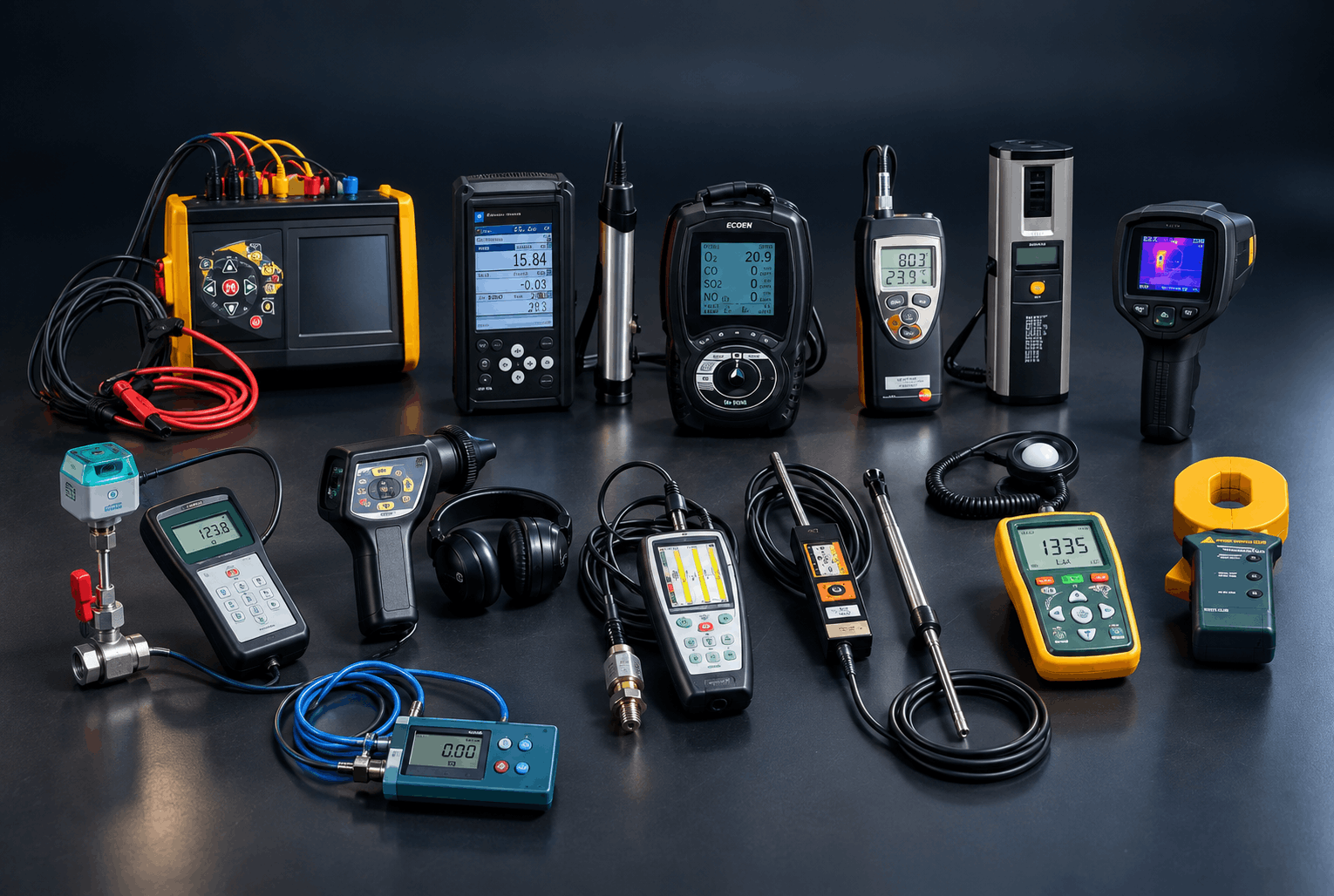
What we measure in the field
- Free air delivery using an inline or clamp-on compressed air flow meter
- Compressor electrical input including voltage, current, power factor and kW
- Discharge pressure and the pressure profile across the distribution network
- Inter-cooler and after-cooler air and cooling water temperatures
- Leakage, located and quantified using an ultrasonic leak detector
Why leak detection has to be quantified, not just noticed
A leak survey that ends with “there are leaks” cannot be prioritised. Each abnormality should be tagged, located and converted into a leakage rate and an annual cost, so that maintenance effort is spent where the money is.
In one assessment, measurement across generation, cooling and distribution identified a potential of 223 kW of avoidable load — arrived at by measurement, not benchmark assumption.
Where to start
- Install permanent flow and pressure measurement at the compressor house header
- Establish a baseline specific power consumption and trend it weekly
- Run a tagged leak survey at least twice a year and re-measure after correction
- Reduce system pressure to the lowest level the process genuinely needs